
Few sights worry a homeowner more than cupped boards or a dark stain spreading across a hardwood floor. A leaking dishwasher, a burst pipe during a hard freeze, or rain driven under a door during a fall storm can all leave water sitting where it does not belong. The good news is that water-damaged hardwood can often be saved when the problem is found early and handled by people who know wood. At Brucke Flooring Co., our team has helped Tulsa-area families repair, restore and replace hardwood for years, and we see every kind of water problem Oklahoma weather can create.
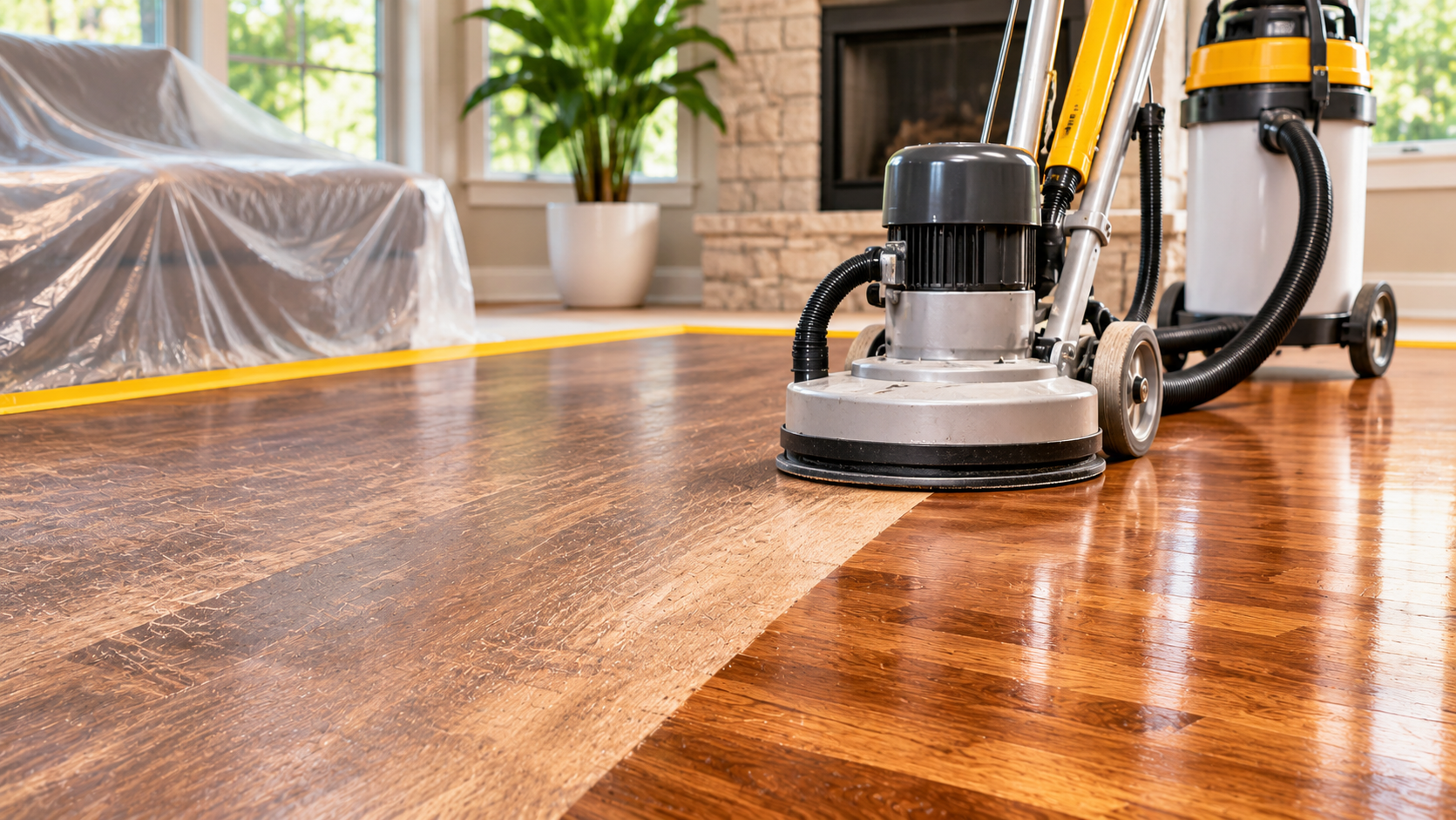
This guide explains how water affects hardwood, which signs point to a repairable floor, what the restoration process looks like, and how to protect your floors through the colder months ahead.
The Quick Answer
Many water-damaged hardwood floors can be saved if the water is removed quickly, the boards and subfloor are dried properly, and the damage is limited to surface staining or mild cupping. Floors that have soaked for days, show mold, or have a damaged subfloor often need partial or full replacement. A professional moisture reading is the only reliable way to know which situation you are in.
How Water Affects Hardwood
Wood is a natural material that absorbs and releases moisture. When a floor takes on water, the boards swell. Because the bottom of each board usually gets wetter than the top, the edges rise and the center sinks, a shape called cupping. If the top dries faster than the bottom, or if a cupped floor is sanded too soon, boards can later crown, rising in the middle instead.
Water also affects the finish. Standing water can leave white haze in the coating, while water that reaches bare wood can create gray or black stains, especially around nails and where tannins in oak react with moisture.
Signs Your Floor Can Likely Be Saved
-
Mild cupping that began recently and is improving as the room dries
-
Surface staining limited to the finish or top layer of wood
-
Boards that are still tight and firmly fastened
-
No musty smell or visible mold
-
A dry, solid subfloor after professional drying
Signs Replacement May Be Needed
-
Boards that are buckling or lifting off the subfloor
-
Deep black staining that runs through the wood
-
Soft spots or a damaged subfloor
-
Mold growth on the boards, underlayment or framing
-
Water that sat for several days before it was found
What to Do Right After a Leak
The first hours matter most. Taking a few steps quickly can be the difference between a repair and a full replacement:
-
Stop the source. Shut off the water supply or fix the leak.
-
Remove standing water. Use towels, a wet vacuum and mops.
-
Move furniture and rugs. Wet rugs hold moisture against the floor.
-
Increase airflow. Run fans and a dehumidifier, and keep the HVAC system running.
-
Avoid heat guns or high heat. Drying too fast can crack boards.
-
Call a professional. A moisture meter shows how deep the water went.
How Professional Restoration Works
Our water damage restoration process starts with an inspection and moisture readings across the floor and subfloor. From there, the plan depends on what we find.
Drying
Controlled drying brings the wood back toward normal moisture levels without shocking it. This step can take days, and patience protects the floor.
Assessment After Drying
Once the boards stabilize, many cupped floors flatten significantly on their own. We reassess before any sanding so we do not remove wood that would have settled.
Board Replacement
Boards with deep stains or permanent damage can be cut out and replaced with matching species and width, then woven into the existing floor.
Sanding and Refinishing
After repairs, the floor can be sanded and refinished so new and original boards blend into one even surface.
Oklahoma Weather and Hardwood
Green Country weather puts hardwood through a lot. Fall storms can push rain under doors and through window wells, and winter cold snaps can freeze and split pipes in exterior walls and crawl spaces. Many homes around Jenks and the river corridor sit on crawl spaces, where humidity can build and push moisture up into the floor from below. Keeping crawl space vents and vapor barriers in good shape helps protect the boards above.
Preventing Water Damage This Winter
-
Insulate pipes in exterior walls, attics and crawl spaces
-
Keep the thermostat steady when you travel
-
Check dishwasher, refrigerator and washing machine hoses
-
Clean gutters so rain flows away from the foundation
-
Place mats inside every exterior door for wet boots
-
Wipe up spills and pet water bowls promptly
Does Insurance Cover Water-Damaged Floors?
Many homeowner policies cover sudden, accidental water damage, such as a burst pipe, while slow leaks over time are often excluded. Coverage varies by policy, so review yours and contact your insurer early. Clear photos, moisture readings and a written assessment from a flooring professional can help the claim move forward.
Repair or Replace: Making the Call
If most of the floor can be saved, targeted board replacement and refinishing usually make the most sense. When damage covers a large area, or the subfloor needs work, replacing the floor in that room can deliver a better long-term result. Our team will walk you through both options honestly so you can decide with confidence.
Frequently Asked Questions
How long does hardwood take to dry after a leak? It depends on how much water was involved, the room and the season. Drying often takes several days to a few weeks.
Will cupped boards flatten on their own? Mild cupping often improves once the wood dries. Sanding too early can cause crowning later.
Can you match my existing hardwood? In most cases, yes. We match species, width and finish so repairs blend in.
Get Help Saving Your Floor
Water damage feels urgent, and a quick, informed response gives your hardwood the best chance. Whether you live in Jenks, Tulsa or nearby, we can inspect the floor, explain your options and handle repairs or replacement. Visit our showroom at 8716 South Peoria Avenue, Tulsa, OK 74132, or call (918) 599-8100. Get in touch with Brucke Flooring Co., and our team will help you protect the floors you love.